











 Serving the Kansas City Metro

Pressure-Treated Wood Decking in Kansas City
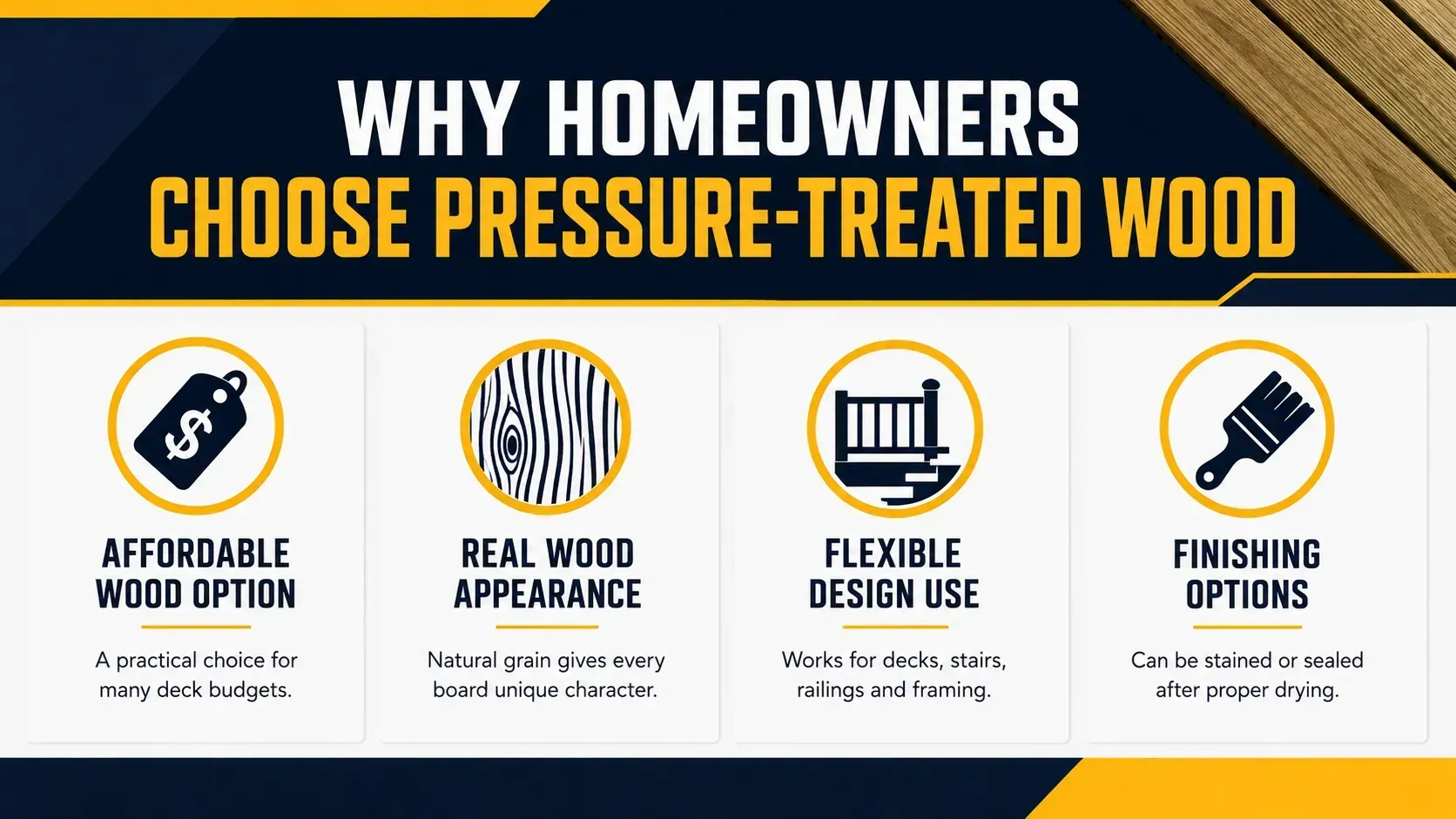







Pressure-treated lumber gives you a natural wood surface with a lower upfront cost than many alternatives. Deck boards, framing, and posts can need different treatment ratings. We’ll explain which ones fit your Kansas City site and what cleaning and finishing the deck will need.
Show moreThe right lumber depends on how each part of the deck is exposed to moisture. A decking board, a joist, and a post near the ground can need different specifications. We can discuss those choices along with a plan for staining and routine care. Compare all decking materials with Tuff Deck Builders Kansas City.
Show lessContact Us
How Pressure-Treated Lumber Is Used
Pressure treatment introduces preservatives into the wood to protect against fungal decay and wood-destroying insects. Southern pine is one option. The boards retain the grain and knots of lumber and can be stained once they’re dry enough for the finish.
Show moreWhere treated wood fits
Treated lumber can form the walking surface or serve in structural framing beneath a different decking material. Each component has its own requirements for grade, dimensions, treatment, and hardware.
See our decking materials to compare surface options.
Meet our Kansas City deck team and learn how we plan projects around your home, yard, and priorities.
Show less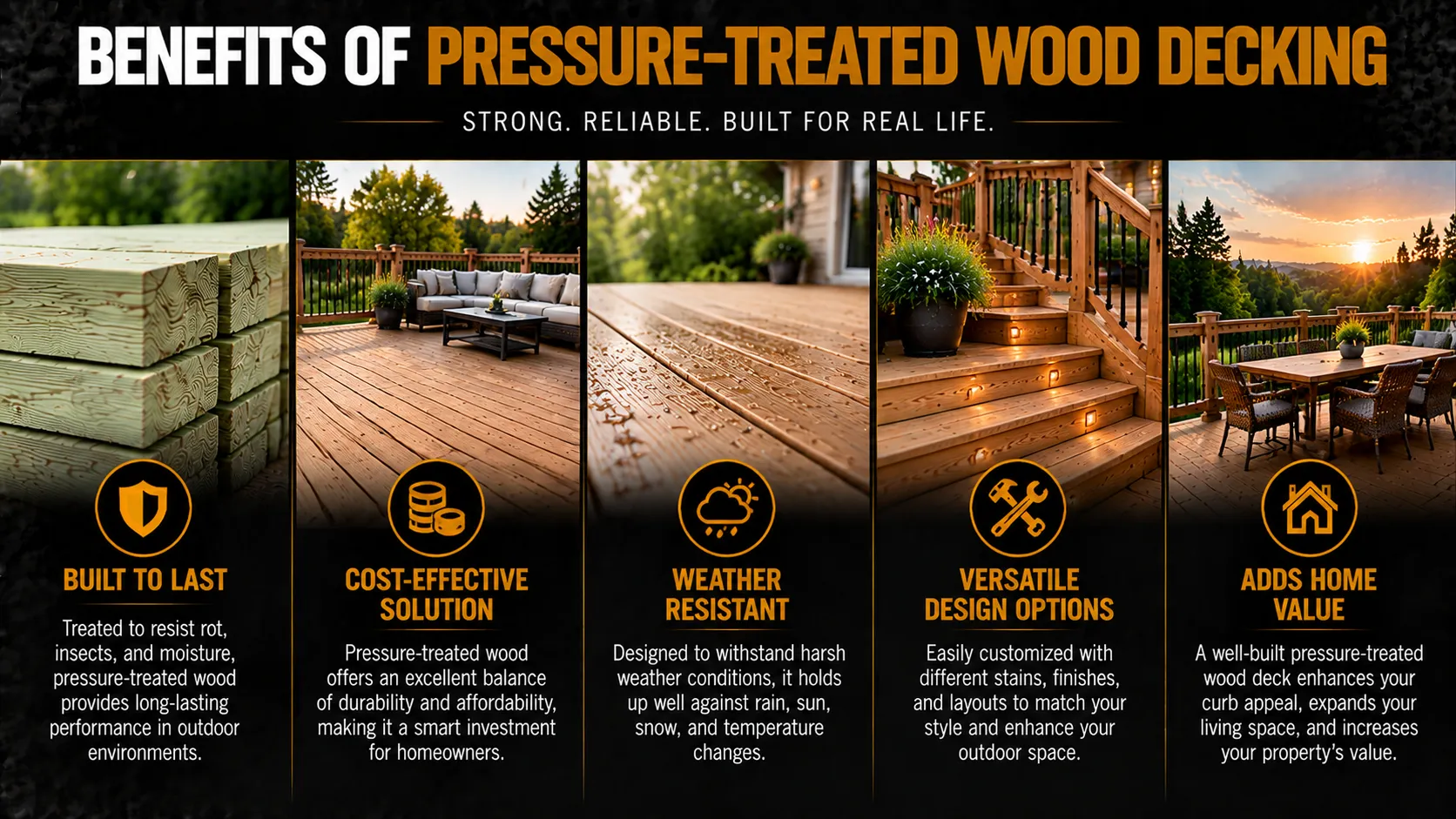
Contact Us
Choosing Deck Boards and the Right Treatment Rating
Look at both the lumber grade and the use category printed on the treatment tag. The grade describes the wood and its intended uses. The treatment tag helps your builder select material for the exposure each piece will face.
Show moreMatch the lumber to its location
Above-ground and ground-contact ratings describe different exposure conditions. Parts close to damp soil or hard to replace can need a different rating from well-ventilated deck boards. If appearance matters, compare board faces and ask whether kiln-dried-after-treatment stock is available.
See the American Wood Protection Association homeowner guide.
Browse our deck and outdoor living projects for ideas on board colors, railings, stairs, and layouts.
Show less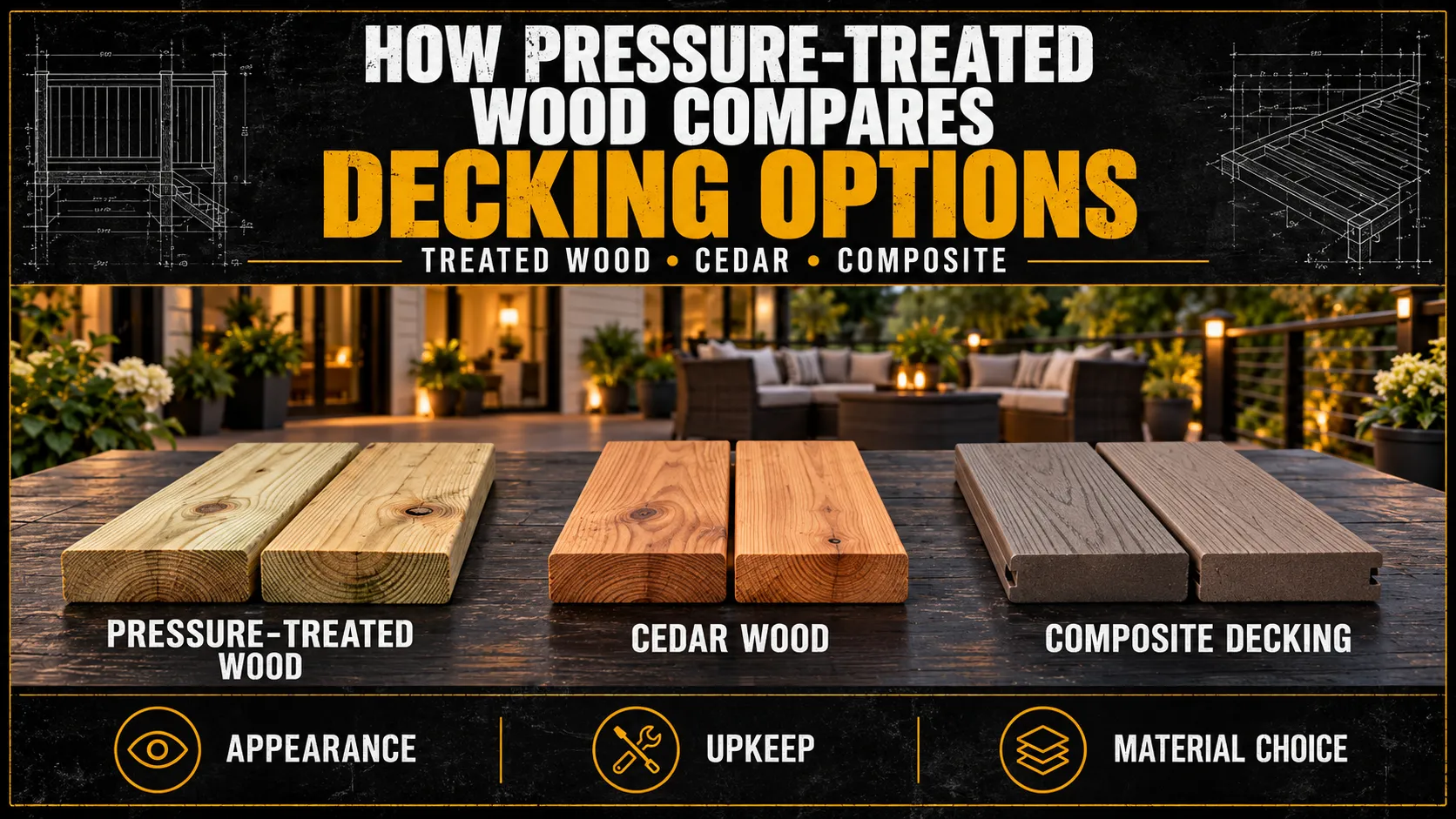
Contact Us
Pressure-Treated Deck Designs and Useful Features
A pressure-treated deck can connect a back door to the yard with a simple landing, or it can add a larger area for dining and seating. Stair location, railing, and how you reach the yard often matter more to daily use than the shape of the outline.
Show moreChoose features before framing
- Plan stairs and landings around the slope and the route through the yard.
- Decide where privacy panels, lighting, or a gate will be most useful.
- Discuss which surfaces will be stained and which finish works with the selected boards.
See our deck services for help planning the layout and features.
Show less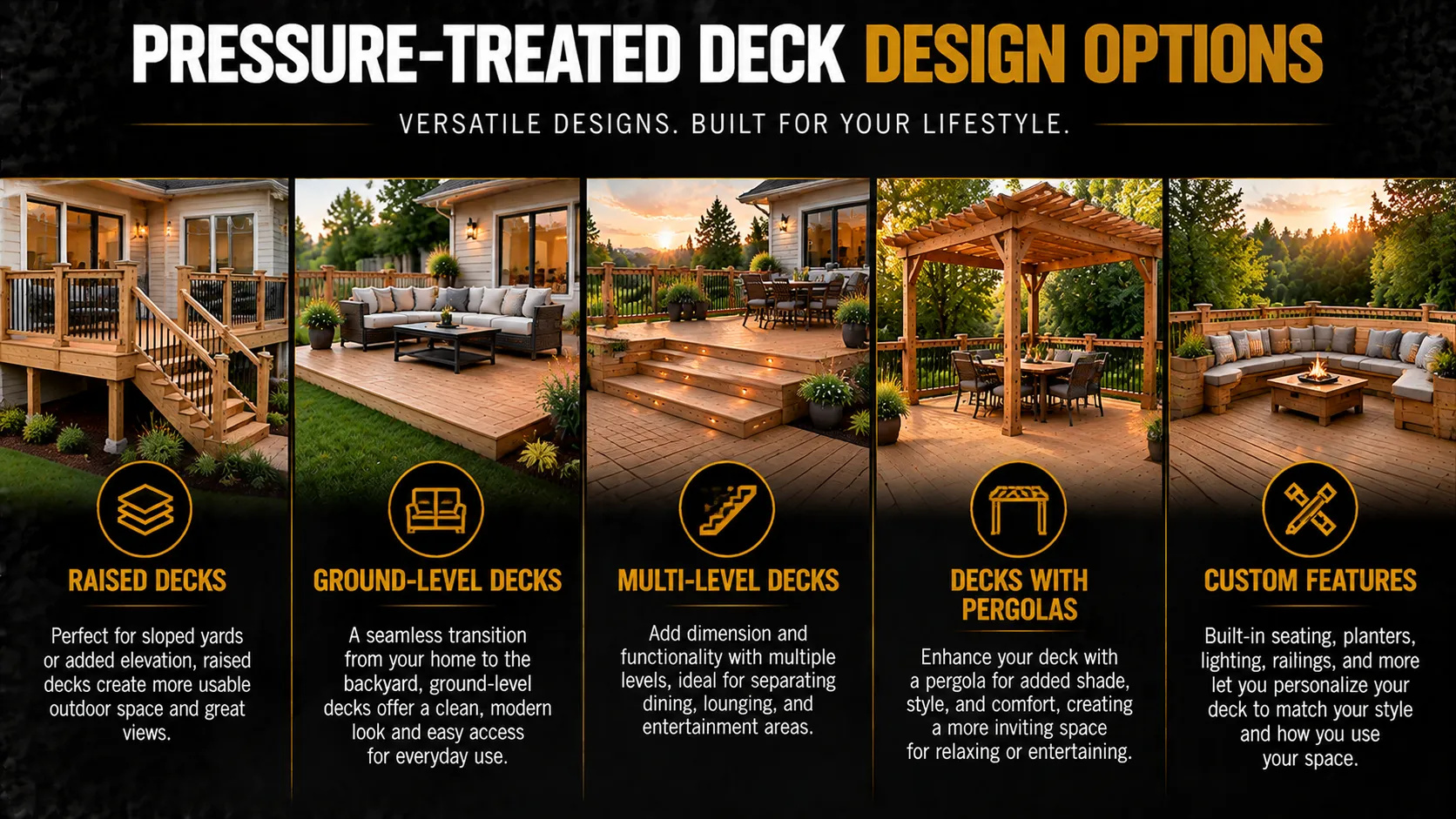
Contact Us
Building With Pressure-Treated Wood
A well-built treated wood deck starts with the structure and the way it handles water. We look at footing and framing needs, hardware compatibility, and site drainage before deciding how the decking will be installed.
Show moreAccount for the lumber’s moisture
Wet treated lumber can shrink as it dries. The installer should set spacing for the condition of the boards and use fasteners and connectors rated for the preservative and exposure. Follow the product’s instructions for any field treatment of cuts or holes.
For an older deck, have the frame evaluated before pricing a board-only replacement.
Use our deck design tool to organize layout ideas before discussing the framing and installation scope.
Show less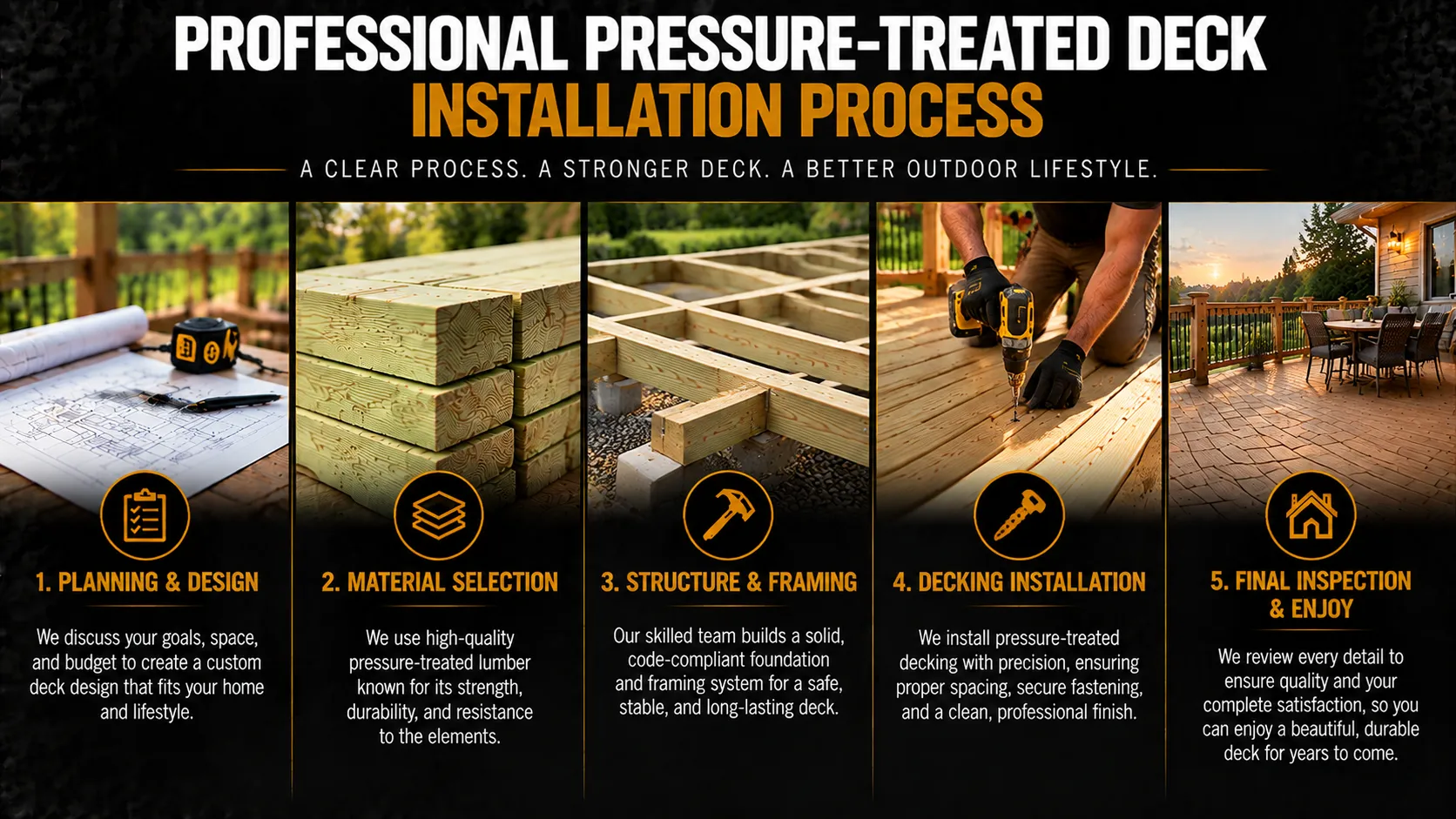
Contact Us
Pressure-Treated Decking Through Kansas City’s Seasons
Periods of rain and humidity can slow drying, especially where a deck sits low or is shaded by trees. Keep runoff moving away from the house, leave room for airflow beneath the boards, and clear leaves from the surface and gaps.
Show moreStain when the wood is ready
Check that the wood meets the finish manufacturer’s moisture and weather requirements before staining or sealing. Inspect the boards after winter, especially exposed treads and areas beneath planters. Clean debris and check for loose hardware and finish wear as part of seasonal upkeep.
See Treated Wood’s staining guidance.
See our Kansas City service areas across the Missouri and Kansas metro.
Show lessContact Us
Request a Pressure-Treated Deck Quote
Start with rough dimensions, photos, and a description of how you want to use the deck. Tuff Deck Builders Kansas City can discuss the framing, walking surface, railing, and site work that should go into the estimate. Request a free deck estimate to discuss your options.
Show moreAsk what the quote covers
Compare the board grade and treatment rating, hardware, removal, new footings, stairs, and railing. Ask whether staining is included, when the wood is likely to be ready, and who will handle any permits or inspections required for your address.
Request a treated wood deck quote or call (913) 379-3099.
If you want to explore payment options, our deck financing page explains how to get started. Financing may be available for qualified homeowners.
Show less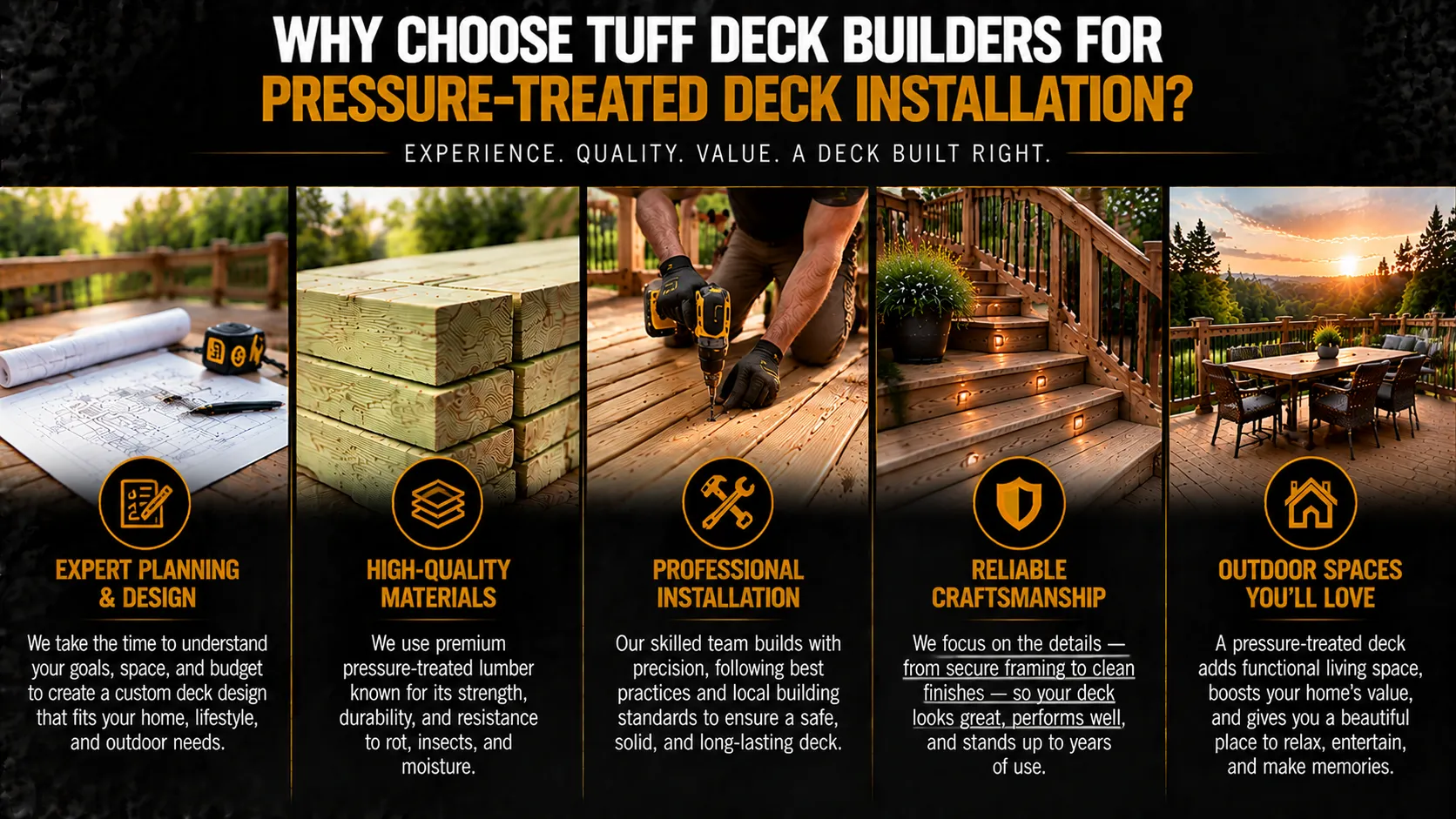
Contact Us
Frequently Asked Questions
How do I choose a pressure-treated deck contractor in Kansas City?
Choose a contractor who can explain the lumber ratings, drainage plan, and hardware specified for your yard. Ask for comparable projects, an itemized proposal, proof of insurance, and who will handle permits or inspections if required.
Is pressure-treated lumber suitable for a low deck in Kansas City?
It can be, if the treatment ratings, ground clearance, and drainage fit the exposure. Low decks can dry slowly, so ask your builder to explain which components need ground-contact-rated lumber and how air will circulate beneath them.
What should I compare in Kansas City quotes for a pressure-treated deck?
Compare the same footprint, lumber specifications, framing, stairs, and railing. Check whether demolition, disposal, permits, and a later stain application are included. Differences in those items can explain more of the price than deck area alone.
Can I put pressure-treated deck boards on my existing frame in Kansas City?
Yes, if the framing is sound and suitable for the new surface. Have the joists, ledger, beams, posts, and connections inspected, with special attention to water damage, soft wood, and any sections that need replacement.
When can I stain a new pressure-treated deck in Kansas City?
Stain after the boards have dried enough for your chosen finish. Rain, shade, humidity, and the initial moisture in the lumber can all affect drying time. Follow the stain maker’s instructions and check the wood before scheduling the work.
What should I have ready for a pressure-treated deck quote in Kansas City?
Have rough measurements, photos of the access and existing deck, and a list of features you need. Point out downspouts, standing water, and the location of doors and stairs so the contractor can review those conditions.
What do above-ground and ground-contact ratings mean?
They describe the exposure conditions the treated wood is intended for. Read the end tag and ask the builder to match the rating to each deck component, especially where damp soil, poor airflow, or persistent wetting is expected.
Can I add metal railing to a pressure-treated wood deck?
Yes, if the railing is compatible with the deck and the posts have proper structural support. Choose the railing before work begins so the builder can plan blocking, connectors, and hardware compatible with the treated lumber.
Why are gaps opening between my new pressure-treated deck boards?
New treated boards can shrink across their width as they dry. Some change is expected, especially when lumber was installed wet. Ask the installer to check uneven gaps, loose fasteners, or raised edges that affect footing.
What maintenance does a pressure-treated deck need?
Keep the deck clean and check the boards, stairs, and hardware regularly. Remove leaves and soil, clear drainage paths, and maintain the coating according to its label. Address soft boards or loose railings promptly.